Friday, March 10, 2017

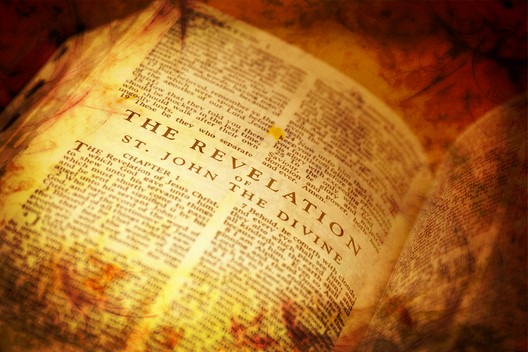
STUDYING THE BOOK OF REVELATION - THE REVELATION OF JESUS CHRIST (2)

 LETTERS OF THE SEVEN CHURCHES


Revelation 1:4-8
King James Version (KJV)


4 John to the seven churches which are in Asia: Grace be unto you, and peace, from him which is, and which was, and which is to come; and from the seven Spirits which are before his throne;

5 And from Jesus Christ, who is the faithful witness, and the first begotten of the dead, and the prince of the kings of the earth. Unto him that loved us, and washed us from our sins in his own blood,

6 And hath made us kings and priests unto God and his Father; to him be glory and dominion for ever and ever. Amen.

7 Behold, he cometh with clouds; and every eye shall see him, and they also which pierced him: and all kindreds of the earth shall wail because of him. Even so, Amen.

8 I am Alpha and Omega, the beginning and the ending, saith the Lord, which is, and which was, and which is to come, the Almighty.


background and Date. Evidence within Revelation indicates that it was written during a period of extreme persecution of Christians, which possibly was that begun by Nero after the great fire that nearly destroyed Rome in July of A.D. 64 and continued until his suicide in June of A.D. 68.  In this view, the book thus was written before the destruction of Jerusalem in September of A.D. 70, and is an authentic prophecy concerning the continuing suffering and persecution of Christians, which would become even more intense and severe in the years ahead.  On the basis of isolated statements by the early church fathers, some interpreters date the book near the end of the reign of Domitian  (A.D. 81-96), after John had fled to Ephesus.

v  1.5 Witness.   One who testifies to the truth he has experienced a witness, one who has knowledge of a fact and can give information concerning it.  The word in itself does not imply death, but many of the first-century witnesses did give their lives, with the result that the word came to denote a martyr, one who witnesses for Christ by his death (Acts 22:20, Rev. 2:13, 17:6).

Jesus is presented in terms of His redeeming sacrifice, His resurrection, and His eternal reign.  Jesus as Messiah-King is a major theme in Revelation.

v  1.6  The sacrifice of Jesus has given to all believers the privileges that had belonged to ancient Israel (see Ex. 19:6, 29:1-9; 1 Pet. 2:9, 10).  Hath made us kings and priests is clearly a present tense reference to the believer’s function now, in witness and in worship.

v  1.7  The Lord’s return will be actual, personal, and visible (see Acts 1:9-11), Clouds (Dan. 7:13) symbolize God’s presence protection, and leadership.  However, the emphasis here is on the Lord’s coming in judgment (see Zach. 12:10; Matt. 24:30).

v  1.8  God seals the prophecy with the authority of His name Alpha and Omega, the first and last letters of the Greek alphabet, declare that God is everything from A to Z, thus in control of all history(see Is.44:6). As the Almighty One God’s power is absolute.

v  The Seven Churches of the Apocalypse. The churches of seven cities were recipients of an apocalyptic letter from the Lord through John. By commendation, rebuke, and warning, the people of God were exhorted to remain faithful in adversity.  These churches held significant roles in the Christian experience of Asia Minor as a result of their location within a transportation network linking different parts of the region.


Revelation 1: 5,6 – Worship and Praise.  WORSHIP AND THE KINGDOM. 
In the opening of Rev., John introduces himself as a brother and companion in the struggle we all face (v.9). His words "in the kingdom and patience of Jesus Christ" point to the dual facts of Christ’s present kingdom triumph and the ongoing presence of evil and warfare that exact the patience of the church in the kingdom advances among and through us.  In prefacing the broad arenas of prophecy about to be unfolded, John addresses two very important present truths.

1.      We, Christ’s redeemed are loved and are washed from our sins- a present sate (v.6).
2.      We through His glorious dominion, have been designated "kings and priests" to God-also a present calling.  Thus, these dual offices give perspective on our authority and duty and how we most effectively may advance the kingdom of God.

First, we are said to be kings in the sense that under the King of kings we are the new breed – the reborn, to whom God has delegated authority to extend and administrate the powers of His rule.  Of course, this involves faithful witness to the gospel in the power of the Spirit and loving service to humanity in the love of God.  But it also involves confrontation with dark powers of hell, assertive prayer warfare, and an expectation of the miraculous works of God (2 Cor. 10:3-5; Eph. 6:10-20; 1 Cor. 2:4). 

How ever, this authority is only fully accomplished in the spirit of praiseful worship as we exercise the office of "priests".  Some translations read, "a kingdom of priest," which emphasizes that the rule is only effective when the priestly mission is faithfully attended.  Worship is foundational to kingdom advance.  The power of the believer before God’s throne, worshipping the Lamb and exalting in the Holy Spirit of praise, is mightily confounding to the Adversary.

v  1:5,6  Blood Royal.  THE BLOOD.  As John greets his intended audience he extends salutations from the resurrected Lord to the saints whom Jesus loved and forgave by pouring out His life (v.5).  The consequence of this sacrificial death is the gracious elevation of bloodwashed believers to the status of royal priests (v.6).  Such a designation identifies these believers as the true Israel of God.  After Israel’s arrival at Mt. Sinai.  God called Moses into the mountain as a prelude to giving him the Law (Ex. 20).  Moses was told that if the Israelites would live in faithfulness to covenant stipulations they would be God’s unique possession as well as a kingdom of priests and a holy nation (Ex. 20: 5, 6).  These kingly priests undoubtedly are intended to be a corporate body of ministers who witness to God’s saving and succoring power.  They are to manifest praise to God continually for His gracious elevation of them (1 Peter 2:9).  Christ’s blood made this possible for all....…. to be cont’d.


Janet Irene Thomas
Director, Playwright, Gospel Lyricist, Screenwriter
Founder/CEO
Bible Stories Theatre of Fine & Performing Arts


Thursday, March 9, 2017

STUDYING THE BOOK OF REVELATION - THE REVELATION OF JESUS CHRIST (1)

JOHN ON PATMOS


REVELATION 1


Revelation 1:1-3
King James Version (KJV)

1 The Revelation of Jesus Christ, which God gave unto him, to shew unto his servants things which must shortly come to pass; and he sent and signified it by his angel unto his servant John:

2 Who bare record of the word of God, and of the testimony of Jesus Christ, and of all things that he saw.

3 Blessed is he that readeth, and they that hear the words of this prophecy, and keep those things which are written therein: for the time is at hand.


Revelation, or the Book of Revelation of Jesus Christ, is the last book of the Christian Bible. The word ‘Revelation’ means something revealed or shown to us. Yet many people say it can’t be understood, which is not true.

It is the only apocalyptic book in the New Testament of the Bible. As is characteristic of apocalyptic books, Revelation is filled with vivid, highly symbolic imagery. The book reasons to reveal revelations given to John the apostle by Jesus Christ. Modern scholars claim that the book was written by John of Patmos, a different John than the author of The Gospel of John and the three Johannine letters. The book was written at about 96 CE.

v  Understand that our Lord Jesus is the great trustee of divine revelation; it is to him that we owe the knowledge we have of what we are to expect from God and what he expects from us.

v  This revelation Christ sent and signified by his angel. God gave it to Christ, and Christ employed an angel to communicate it to the churches. The angels are God’s messengers; they are ministering spirits to the heirs of salvation. They are Christ’s servants: principalities and powers are subject to him; all the angels of God are obliged to worship him.  The angels signified it to the apostle John. By way of the angels are the messengers of Christ, the ministers are the messengers of the churches; what they receive from heaven, they are to communicate to the churches. John was the apostle chosen for this service.     


 (a.) Some think he was the only one surviving, the rest having sealed their testimony with their blood. This was to be the last book of divine revelation;
and therefore notified to the church by the last of the apostles. John was the beloved disciple. He was, under the New Testament, as the prophet Daniel under the Old, a man greatly beloved. He was the servant of Christ; he was an apostle, an evangelist, and a prophet; he served Christ in all the three extraordinary offices of the church. James was an apostle, but not a prophet, nor an evangelist; Matthew was an apostle and evangelist, but not a prophet; Luke was an evangelist, but neither a prophet nor an apostle; but John was all three; and so Christ calls him in an eminent sense his servant John. John was to deliver this revelation to the church, to all his servants. For the revelation was not designed for the use of Christ’s extraordinary servants the ministers only, but for all his servants, the members of the church; they have all a right to the oracles of God, and all have their concern in them.

v  The evangelists give us an account of the things that are past; prophecy gives us an account of things to come. These future events are shown, not in the clearest light in which God could have set them, but in such a light as He saw most proper, and which would best answer his wise and holy purposes. Had they been as clearly foretold in all their circumstances as God could have revealed them, the prediction might have prevented the accomplishment; but they are foretold more darkly, to precipitate in us reverence for the scripture, and to engage our attention and excite our enquiry. We have in this revelation a general idea of the methods of divine providence and government in and about the church, and many good lessons may be learned hereby. These events (it is said) were such as should come to pass not only surely, but shortly; that is, they would begin to come to pass very shortly, and the whole would be accomplished in a short time. For now the last ages of the world had come.

v  It is a privilege not only to read the scriptures ourselves, but to hear them read by others, who are qualified to give us the sense of what they read and to lead us into an understanding of them. It is not sufficient to our blessedness that we read and hear the scriptures, but we must keep the things that are written; we must keep them in our memories, in our minds, in our affections, and in practice, and we shall be blessed in the deed. The nearer we come to the accomplishment of the scriptures, the greater regard we shall give to them. The time is at hand, and we should be so much the more attentive as we see the day approaching.


 Revelation 1: 3 - The Beatitude
Blessed is anyone who reads the words of this prophecy, and blessed those who hear them, if they treasure the content, because the Time is near.

 The first of Seven Beatitudes to be found in the book (the other six occurring in 14:13; 16:15; 19:9; 20:6; 22:7, 14). The fact that there are precisely seven of these pronouncements is probably coincidental, not stemming from John's allure with the number seven. John's use of the beatitude form shows familiarity with the written or oral traditions behind the Gospels, if not with the Gospels themselves (see, Mt 5:3-12; Lk 6:20-23). The beatitude found here corresponds to one attributed to the risen Jesus in Revelation 22:7: "Blessed is he who keeps
the words of the prophecy in this book." Both recall the saying of Jesus found in Lk 11:28: "`Blessed rather are those who hear the word of God and obey it.'" The difference is that in Revelation the beatitude refers to a written document. The blessing, therefore, is first on the one who reads the words of this prophecy (that is, aloud to a Christian congregation), and second on those who hear it and take to heart what is written in it (that is, the congregation to whom the letter is read).

v  It is easy to forget that among the early Christians almost no one owned any portion of what is now considered Scripture. Even whole congregations were fortunate if they owned more than one of the Gospels. The only access that ordinary Christians had to the Gospels and letters that now make up the New Testament was public reading in worship services. The public reader therefore performed a ministry to the congregation far beyond what is normally the case today (compare 1 Thess 5:27; Col 4:16). The beatitude here is the author's way of saying, "Make sure you have this prophecy read in your worship assemblies! Make sure you listen and pay attention to your reader! And above all, make sure you act on what you have heard!"


T
he urgency of the implied command is emphasized by the critical statement that the time is near. Almost at the end of the book, the same phrase points up the contrast between this prophecy and the book of Daniel: the words given to Daniel were "closed up and sealed until the time of the end" (Dan 12:9), while the words given to John are not to be sealed "because the time is near" (Rev 22:10).

v  For John and his readers the lateness of the hour demanded that his letter not be a closed book but a disclosure, an actual revelation open for all to read, understand and obey. With the passage of nineteen hundred years, it is tempting to assume that the time came and went long ago and nothing happened, or that the time is far off and the book is sealed up again, like Daniel, until some distant "last day."

In either case, the book of Revelation becomes irrelevant and, like most irrelevant things, is left to "experts," whether we define them as professional biblical scholars preoccupied with a distant past or as confident television preachers preoccupied with an imminent, yet somehow theoretical, future. It is time to reclaim the book of Revelation for those who read it and for those who hear it read in church, and above all for those prepared to take its message to heart.

Only in the conviction that somehow "the time" is as near as ever can John's letter still be read as larger than life and vivid in its sights and sounds....….                                                                                                                                   to be cont’d.

Janet Irene Thomas
Director, Playwright, Gospel Lyricist, Screenwriter
Founder/CEO
Bible Stories Theatre of Fine & Performing Arts


Wednesday, March 8, 2017

HOW WE ARE to WAIT for the LORD’S RETURN

HOW WE ARE to WAIT for the
LORD’S RETURN 

(Luke 19:13; Titus 2:13; 1 Peter 1:13; 2 Peter 1:16; 3:1-6)

The Christian is to wait for the Lord’s return with assured and enduring hope.  Paul speaks of "awaiting our blessed hope, the appearing of our great God and Savior Jesus Christ"  (Titus 2:13).  Peter declares that this hope is no mere wishful tinking (2 Peter 1:16).  He admonishes beleaguered Christians to "gird up the loins of your mind, be sober, and hope to the end for the grace that is to be brought unto you at the revelation of Jesus Christ" (1Pet. 1:13). 

The Christian hope takes on a decidedly practical stance in waiting.  The following are the characteristic attitudes of the Christian in the interim in which Christians presently live:

1.     Eage Anticipation

Hebrews 9:28 reads: "Christ was once offered to bear the sins of many; and unto them that look for him shall he apear the second time without sin unto salvation"

2.     Waiting Patiently

It was  not easy for the early church, nor for the contemporary Christian, to await the coming of the Lord.  The Lord’s seeming delay has caused many well-meaning Christians, as well as scoffers, to display impatience by either foolishly setting arbitrary time frames or to dismiss it as already past or as a zealous mistake of Christians.  Peter again warns, "Be not ignorant of this one thing, that one day is with the Lord as a thousand years, and a thousand years as one day" (2 Pet.3:8).  He makes it clear that our Lord’s seeming delay is not a failure of His promise to return, but it is His giving time that all should come to repentance. (2 Pet.3:8).  He makes it clear that our Lord’s seeming delay is not a failure of His promise to return, but it is His giving time that all should come to repentance.

Janet Irene Thomas
Director, Playwright, Gospel Lyricist, Screenwriter
Founder/CEO
Bible Stories Theatre of Fine & Performing Arts


Tuesday, March 7, 2017

THE POWER OF FAITH

THE POWER OF FAITH
___________________________________________
Mark 11: 20-24
King James Version (KJV)

20 And in the morning, as they passed by, they saw the fig tree dried up from the roots.
21 And Peter calling to remembrance saith unto him, Master, behold, the fig tree which thou cursedst is withered away.
22 And Jesus answering saith unto them, Have faith in God.
23 For verily I say unto you, That whosoever shall say unto this mountain, Be thou removed, and be thou cast into the sea; and shall not doubt in his heart, but shall believe that those things which he saith shall come to pass; he shall have whatsoever he saith.
24 Therefore I say unto you, What things soever ye desire, when ye pray, believe that ye receive them, and ye shall have them.


Taking Authority and Victorious Warfare.  FAITH’S WARFARE. 

Our Savior’s action in cursing the fig tree indicates a passion in prayer and faith that we need to learn.  When the disciples later noticed with surprise that the tree had withered completely (v. 20), Jesus responded with a sharp command, “Have faith in God.” Then, calling His followers to “speak to mountains,” He led them to prepare for situation in which they would find it necessary to take direct authority in the spiritual realm to impact things in the natural realm.  (Rev. 12:7-11/Num.10:1-10)
8 Be not ye therefore like unto them: for your Father knoweth what things ye have need of, before ye ask him.


KINGDOM DYNAMICS
Jesus on “Faith’s Confession.”


FAITH’S CONFESSION.

From Jesus’ own lips we receive the most direct and practical instruction concerning our exercise of faith.  Consider three points:

1)   It is to be in ″God.″ Faith that speaks is first faith that seeks.  The Almighty One is the Source and Grounds of our faith and being.  Faith only flows to Him because of the faithfulness that flows from Him.
2)   Faith is not a trick performed with our lips, but a spoken expression that springs from the conviction of our hearts.  The idea that faith’s confession is a ″formula″ for getting things from God is unbiblical.  But the fact that the faith in our heart is to be spoken, and thereby becomes active and effective toward specific results, is taught here by the Lord Jesus.
3)   Jesus’ words ″whatever things″ apply this principle to every aspect of our lives.  The only restrictions are (a) that our faith be ″in God″ our living Father and in alignment with His will and word: and (b) that we ″believe″ - not doubting in our hearts.  Thus, ″say unto this mountain″ is not a vain or superstitious exercise or indulgence in humanistic mind-science, but instead becomes an applied release of God’s creative word of promise.


Our Faith in God Is the Key to Our Receiving
SEED FAITH

Believing can take opposite forms.  It can be faith or it can be doubt.  When we believe that God exists and that He loves us and wants to meet our needs, then our believing creates faith in our heart.

On the other hand, doubt is just as real.  The reverse of faith, doubt tells us that God does not exist or that He is unloving and uncaring about our needs.  Doubt gives rise to fear, which brings torment, not peace.  Fear actually keeps  one from receiving t he good things God desires to send our way.  Capture this truth: Doubt and do without; with faith believe, and receive. 
″EXPECT A MIRACLE!″
Expectancy opens our lives to God and puts us in a position to receive salvation, joy, health, financial supply, or peace of mind-everything good our heart longs for, and more!


D
ear Friends, The positive lesson to be learned from the cursing of fig tree is the power of believing prayer.  A mountain is symbolic of an obstacle, hindrance, or insurmountable problem.  Faith is the key that releases the resources of heaven into our situation (v.24).


Janet Irene Thomas
Director, Playwright, Gospel Lyricist, Screenwriter
Founder/CEO
Bible Stories Theatre of Fine & Performing Arts


Monday, March 6, 2017

FAITH (4)

Definition of Faith -3


Hebrews 11: 30 – 40
King James Version (KJV)


30 By faith the walls of Jericho fell down, after they were compassed about seven days.
31 By faith the harlot Rahab perished not with them that believed not, when she had received the spies with peace.
32 And what shall I more say? for the time would fail me to tell of Gedeon, and of Barak, and of Samson, and of Jephthae; of David also, and Samuel, and of the prophets:
33 Who through faith subdued kingdoms, wrought righteousness, obtained promises, stopped the mouths of lions.
34 Quenched the violence of fire, escaped the edge of the sword, out of weakness were made strong, waxed valiant in fight, turned to flight the armies of the aliens.
35 Women received their dead raised to life again: and others were tortured, not accepting deliverance; that they might obtain a better resurrection:
36 And others had trial of cruel mockings and scourgings, yea, moreover of bonds and imprisonment:
37 They were stoned, they were sawn asunder, were tempted, were slain with the sword: they wandered about in sheepskins and goatskins; being destitute, afflicted, tormented;
38 Of whom the world was not worthy:) they wandered in deserts, and in mountains, and in dens and caves of the earth.
39 And these all, having obtained a good report through faith, received not the promise:
40 God having provided some better thing for us, that they without us should not be made perfect.

KINGDOM DYNAMICS


11:31 Rahab’s faith was based on the record of God’s mighty deeds and promises to Israel (Josh. 2:9-11).
11:32 A detailed study of the lives of these mentioned shows the outstanding place that faith had in the experience and service of each. Personal shortcomings were victoriously overcome as the looked away from themselves to the greatness of God.
11:35-38 The fact that others were tortured and suffered in various other ways indicates that faith does not provide an automatic exemption from hardships, trials, or tragedy. Furthermore, the experience of such difficulties does not mean that the people undergoing them possess less faith than those who are not afflicted. The same faith that enables some to escape trouble enables others to endure it. The same faith that delivers some from death enables other to die victoriously. Faith is not a bridge over troubled waters, but is a pathway through them. Discerning the pathway and the source of any hardships encountered requires aggressive prayer and worship. Through these means, God’s perspective becomes focused.
11:39-40 In spite of the good report resulting from their faith, the OT saints received not the promise of the blessings of the New Covenant brought by Christ. Made perfect: The body of Christ will be complete with the saint from both OT and NT times.

Janet Irene Thomas
Director, Playwright, Gospel Lyricist, Screenwriter
Founder/CEO
Bible Stories Theatre of Fine & Performing Arts

Friday, March 3, 2017

FAITH (3)

     Definition of Faith - 2


Hebrews 11: 20 – 29
King James Version (KJV)


Isaac
20 By faith Isaac blessed Jacob and Esau concerning things to come.
21 By faith Jacob, when he was a dying, blessed both the sons of Joseph; and worshipped, leaning upon the top of his staff.

Joseph
22 By faith Joseph, when he died, made mention of the departing of the children of Israel; and gave commandment concerning his bones.

Moses’ Parents
23 By faith Moses, when he was born, was hid three months of his parents, because they saw he was a proper child; and they were not afraid of the king's commandment.

Moses
24 By faith Moses, when he was come to years, refused to be called the son of Pharaoh's daughter;
25 Choosing rather to suffer affliction with the people of God, than to enjoy the pleasures of sin for a season;
26 Esteeming the reproach of Christ greater riches than the treasures in Egypt: for he had respect unto the recompence of the reward.
27 By faith he forsook Egypt, not fearing the wrath of the king: for he endured, as seeing him who is invisible.
28 Through faith he kept the passover, and the sprinkling of blood, lest he that destroyed the firstborn should touch them.
29 By faith they passed through the Red sea as by dry land: which the Egyptians assaying to do were drowned.

KINGDOM DYNAMICS


  • 11:26 had respect: the word literally means "to look away from everything else in order to look intently on one object." Moses looked away from the wealth of world systems toward a messianic future.

11:20 No mention is made of Jacob’s deceit, revealing how grace covers all.

11:21 Though his natural sight was gone Jacob’s eye of faith was clear as he crossed his hands and pronounced the greater blessing on Ephraim, the younger son (Gen. 48:13-20)

11:22 Joseph expressed complete faith in the promises concerning the land of Canaan, and spoke of a departing from Egypt centuries in the future

11:23 The story of Moses’ faith begins with the faith of his parents.

11:24-26 Only faith could influence such a great choice, which looked far beyond the present scene.

11:27 Probably refers to the night of the Exodus. Only a godly faith can see the invisible.


Janet Irene Thomas
Director, Playwright, Gospel Lyricist, Screenwriter
Founder/CEO
Bible Stories Theatre of Fine & Performing Arts